
How to Pick a Wedding Band that Complements the Engagement Ring
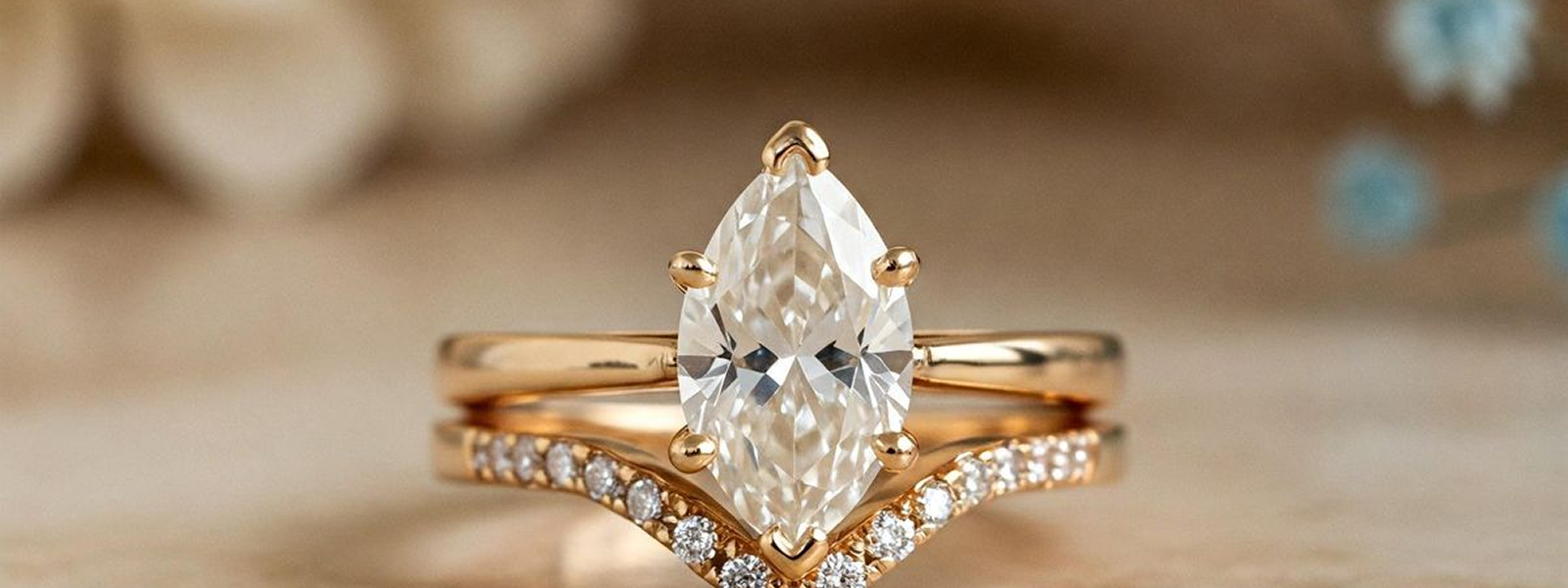
The Ultimate Guide to Perfect Wedding Band Pairings
When shopping for wedding bands, aesthetics are just the beginning. The true secret to a perfect match lies in considering the architecture of your engagement ring, your daily lifestyle, and the long-term comfort of the set. Whether you dream of a seamless flush fit or a modern mixed-metal stack, use this step-by-step guide to find the ring that completes your set.
5 Steps to Finding Your Perfect Match
1. Decide on the "Fit"
The first big decision is how you want the rings to sit together on your finger.
- The Flush Fit: This seamless look occurs when the wedding ring sits level with the engagement ring with no gaps.
- Check your setting: High-set rings (like classic solitaires) usually allow a straight band to slide underneath. Low-set rings often block straight bands, requiring a custom-contoured or curved design to achieve a flush look.
- Check your design: Elaborate side stones, galleries, or hidden halos can obstruct a straight band. In these cases, a notched or curved band can "hug" the silhouette for a snug fit.
- The Gap Style: A flush fit isn't mandatory. A small gap between rings was the traditional standard for decades. It offers flexibility in design, reduces metal-on-metal wear, and allows each ring to stand out individually.
2. Choose Your Metal Strategy
- Matching Metals: Pairing platinum with platinum or yellow gold with yellow gold creates a cohesive, timeless, and unified look.
- Mixing Metals: Mixing metals (e.g., rose gold with platinum) offers a high-contrast, modern aesthetic.
- Pro Tip: Be aware of metal hardness. If you mix metals, a harder metal can scratch a softer one over time. Regardless of your choice, try to match the tone and finish to keep the set looking harmonious.
3. Balance Width and Profile
Proportion is key to a comfortable stack. A thin band can highlight a delicate engagement ring, while a thicker band helps balance out a bold center stone or halo. Ensure the "height" and profile of the rings match (e.g., pairing flat with flat or rounded with rounded) to prevent one ring from overpowering the other.
4. Complement the Style
You don't need to match every detail, but the styles should "speak" to each other.
- Solitaires: A diamond eternity band adds maximum sparkle to a simple stone.
- Vintage Rings: Look for bands with milgrain or filigree details to match the antique vibe.
- Halo Settings: A contoured diamond band often works best to mirror the curve of the halo.
5. Reality Check: Daily Wear
Before finalizing, consider your lifestyle. Will the rings rub or twist against each other? Do you need a design that is easy to resize? If you plan to wear your wedding band alone while traveling or working out, ensure you choose a style that looks beautiful solo.
Best Pairings by Diamond Shape
Every diamond shape has a unique geometry. Finding the right band is about enhancing that shape rather than competing with it. Here is a deep dive into the best pairings for the most popular engagement ring cuts.
Oval Engagement Rings
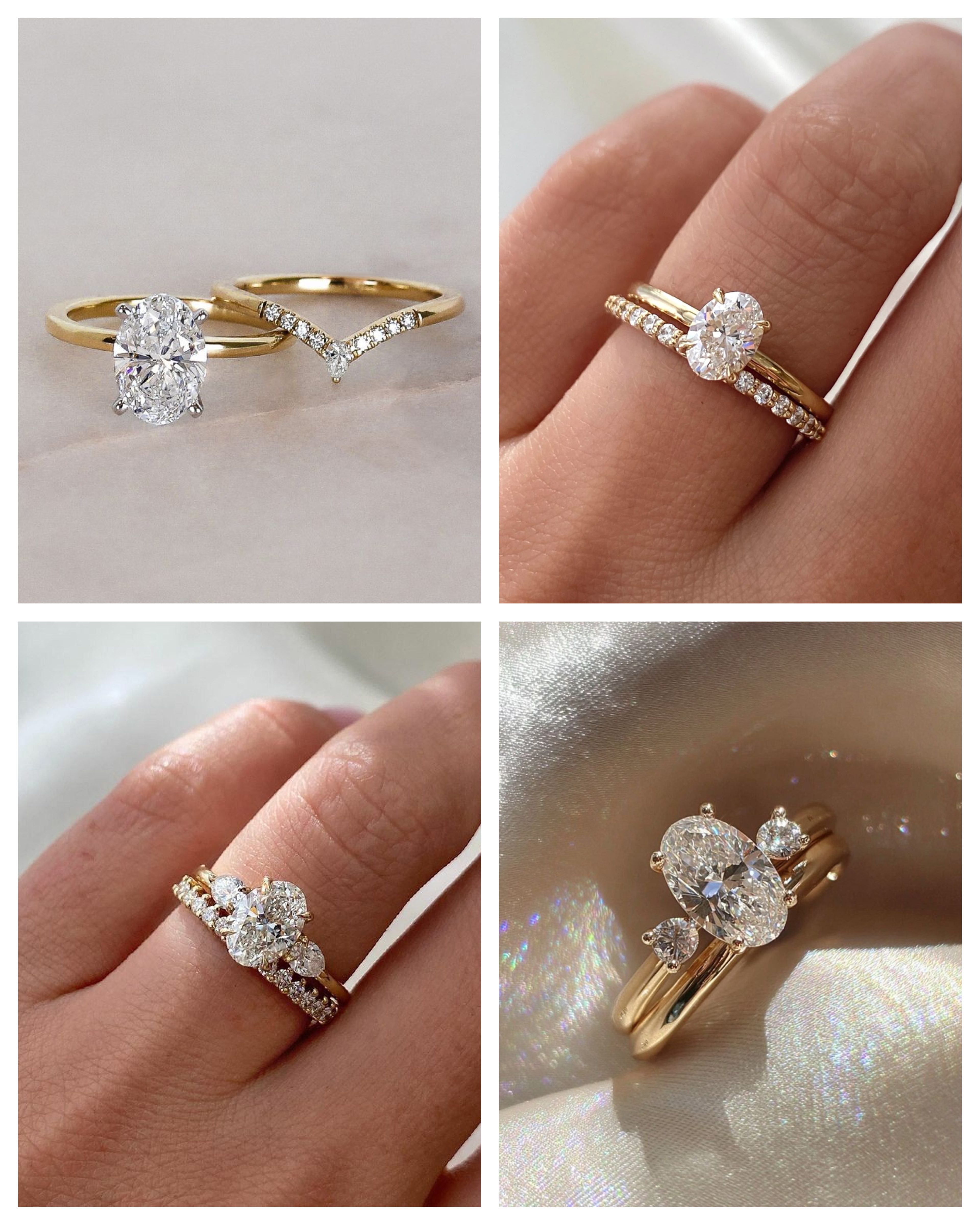
Oval engagement rings are beloved for their finger-lengthening elegance, but their elongated curves can make finding a straight band difficult. To maintain a flush look, opt for curved bands that gently hug the bottom of the stone. If you prefer a more cohesive appearance, an oval-shaped diamond band can mimic the main stone's geometry. For those who want the center stone to remain the sole focus, a thin plain or pavé band will add support without adding visual bulk. The ultimate goal here is to mirror the ring’s graceful curves.
Round Engagement Rings
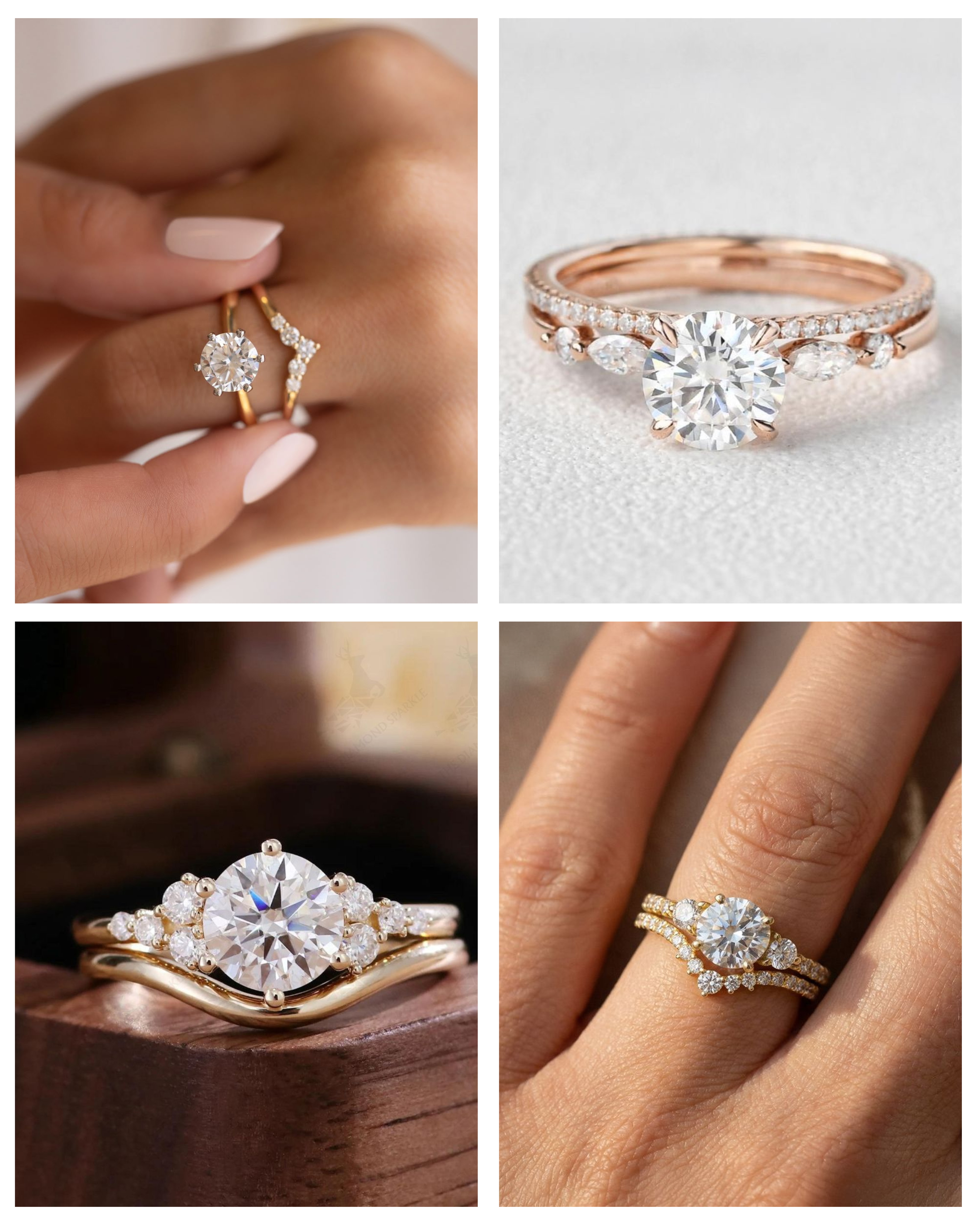
As the most popular and symmetrical cut, round diamonds offer the most versatility. Because the shape is uniform, you have the freedom to play with texture and proportion. Classic pavé bands provide timeless, uninterrupted sparkle, while mixed texture bands (such as braided or hammered metals) can add a modern contrast. If your round stone is set low or features a halo, a contoured band may be necessary to ensure the rings sit close together.
Emerald Engagement Rings
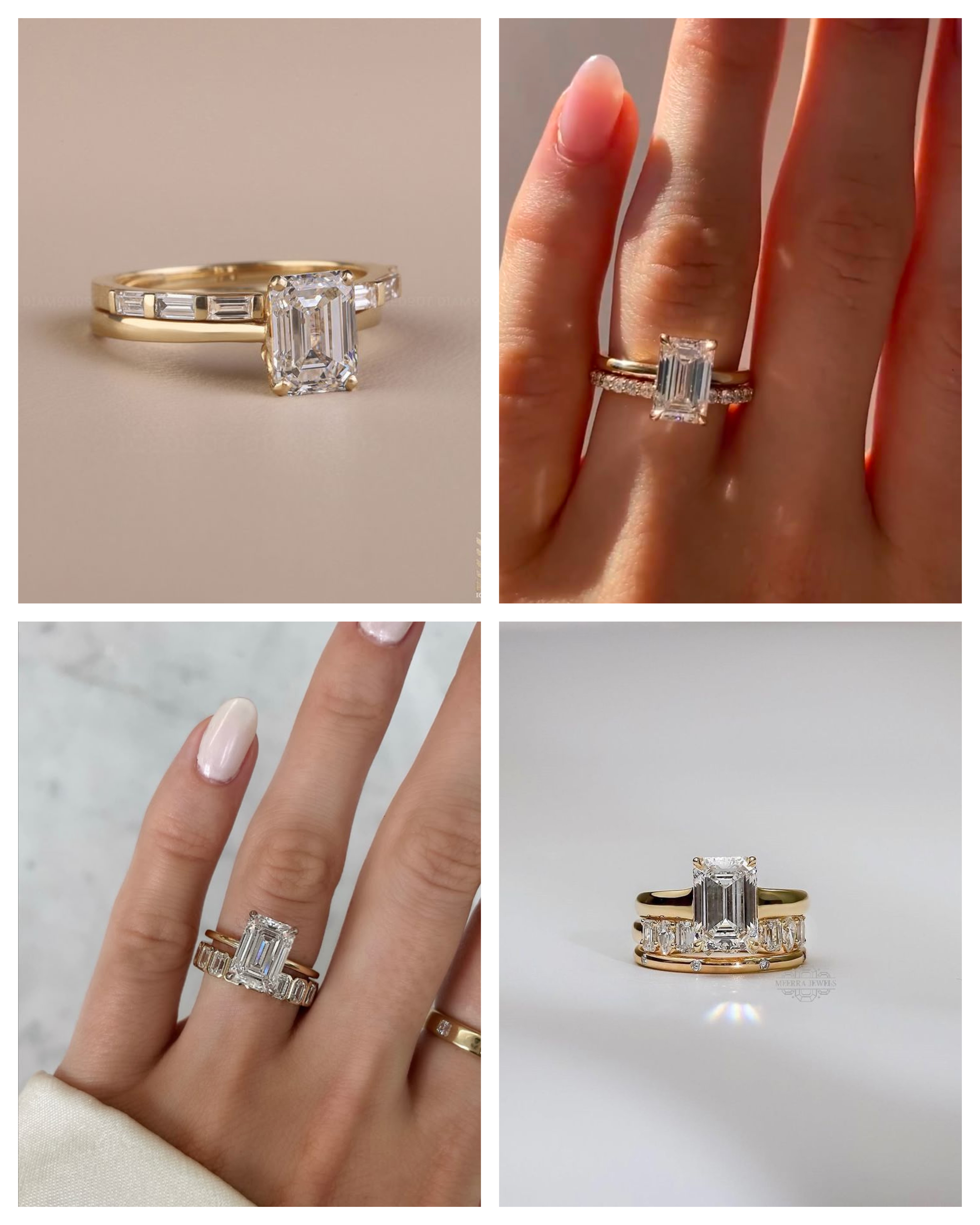
Emerald cuts are defined by their long, clean lines and "step-cut" facets. The wedding band should respect this understated elegance. Channel-set or baguette bands are excellent choices because they echo the rectangular, step-cut flashing of the center stone. For a sleek, geometric look, a flat, polished band works perfectly. However, if you want to add some fire to the set, pairing the emerald cut with brilliant-cut diamonds (like rounds) creates a stunning contrast between the icy clarity of the emerald cut and the sparkle of the band.
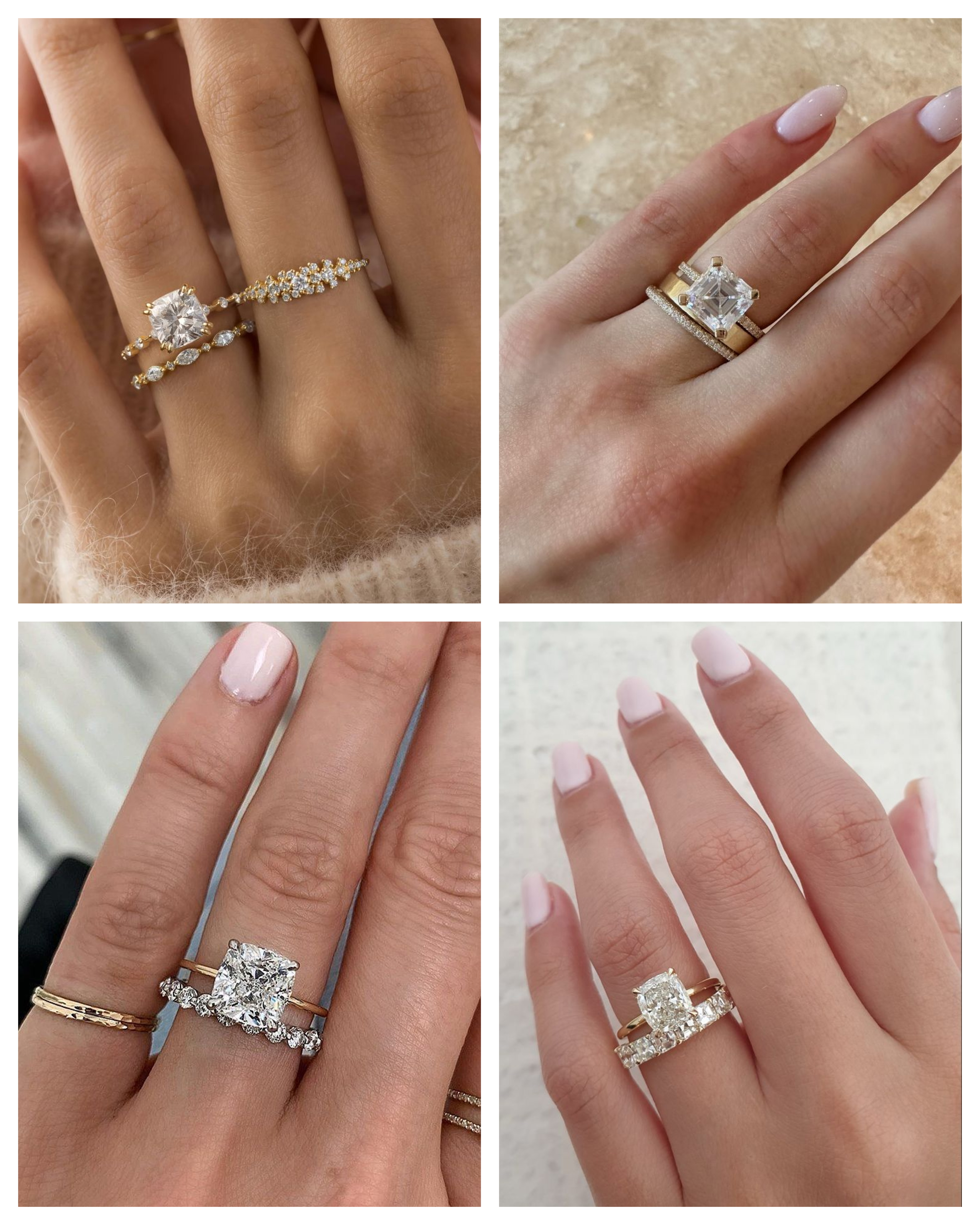
Cushion Engagement Rings
Cushion cuts sit somewhere between a square and a circle, often evoking a soft, vintage feel. Curved bands are ideal here, as they mirror the cushion’s rounded corners for a seamless fit. To lean into the romantic, antique aesthetic, consider vintage-style bands featuring milgrain edging or engraving. Alternatively, for a bold juxtaposition, you can pair the soft curves of the cushion with geometric Art Deco-inspired bands, adding structure to the softer look.
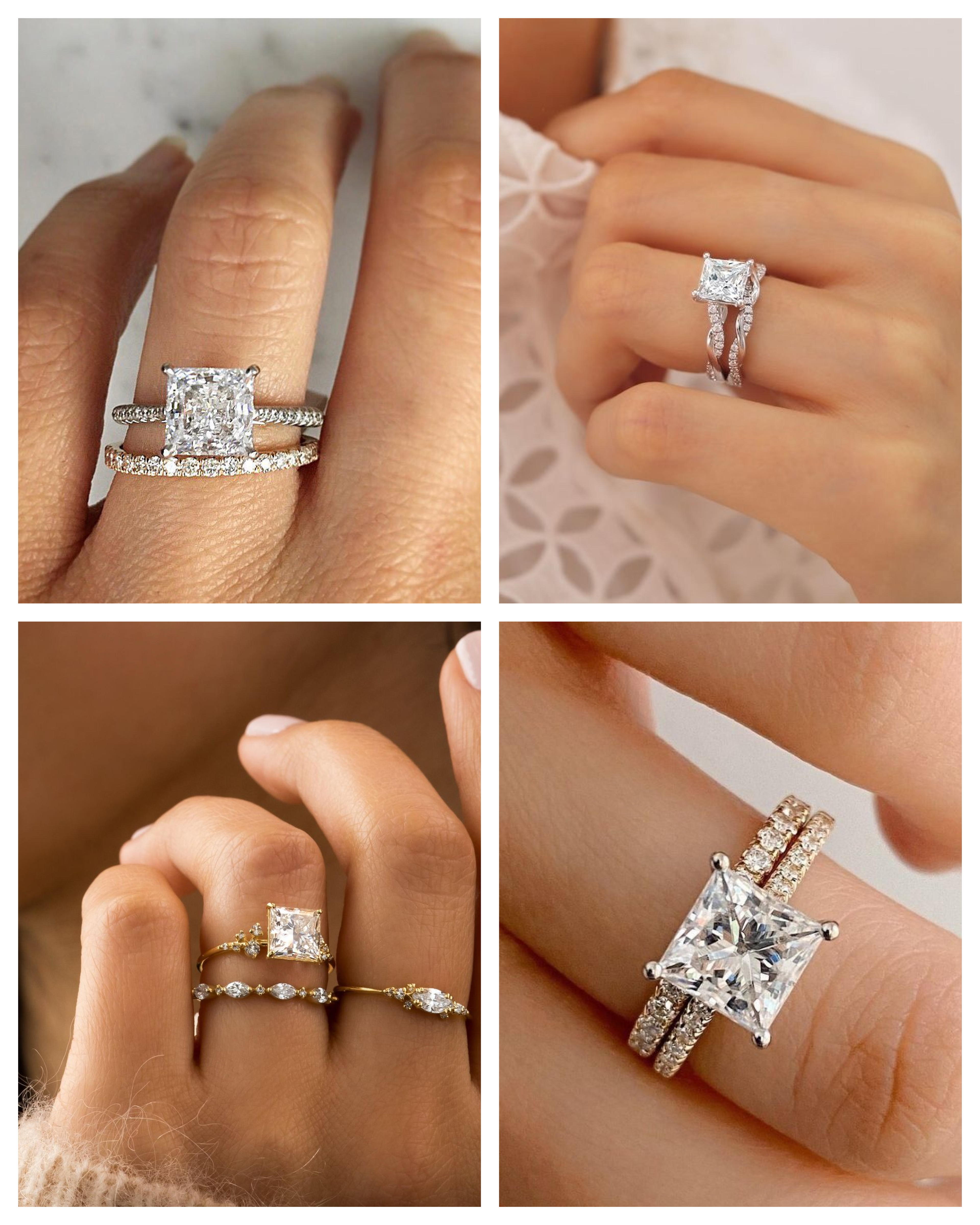
Princess Cut Engagement Rings
Modern, square, and sharp, the Princess cut requires a band that complements its angular nature. Channel-set bands are a top choice as they maintain the clean, unbroken lines of the ring. A knife-edge band is another striking option; its precise, pointed profile echoes the sharp corners of the Princess cut for a minimalist, architectural look. If you wish to soften the geometric sharpness slightly, look for bands with beaded or milgrain detailing.
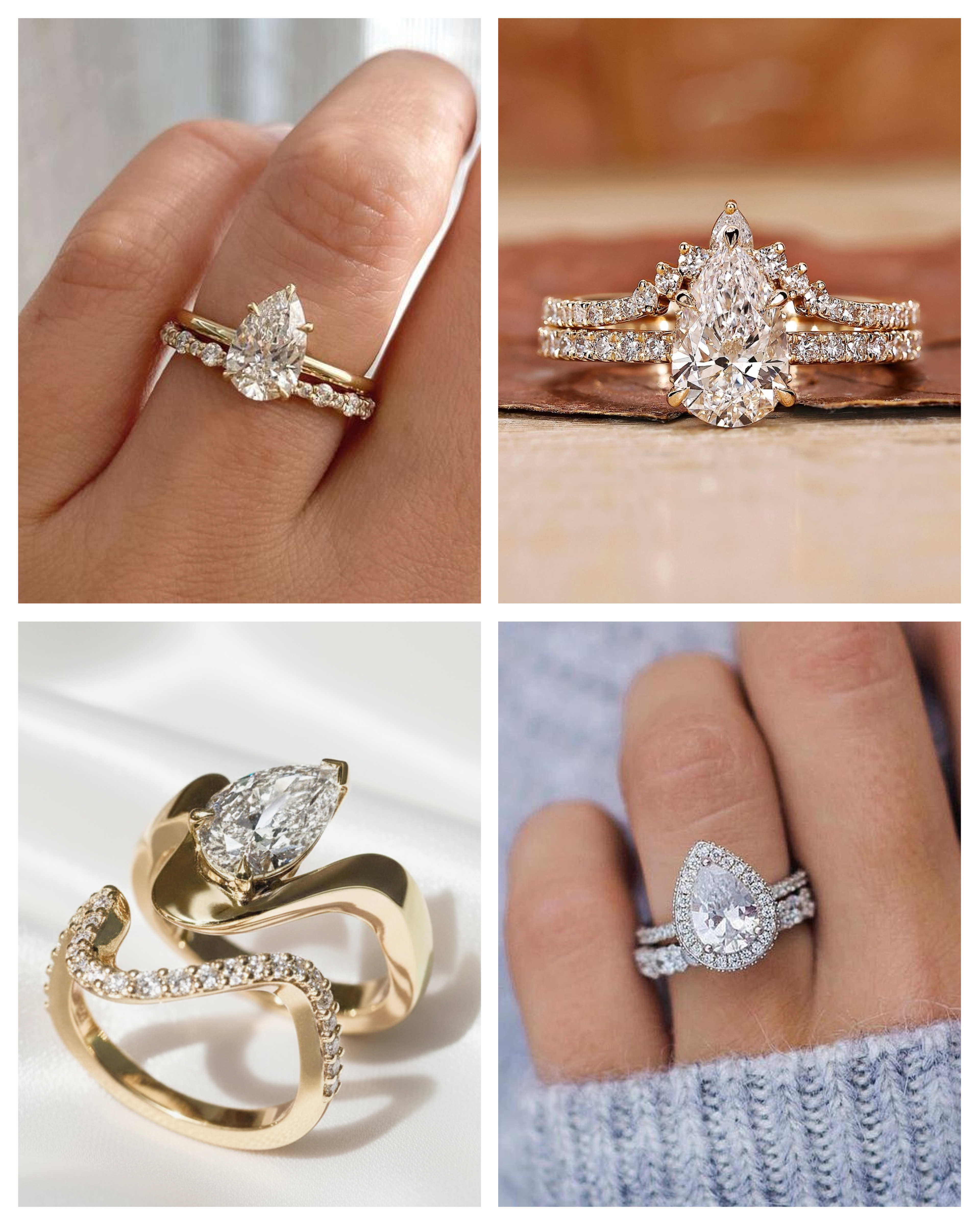
Pear Engagement Rings
The teardrop shape of a pear diamond is asymmetrical, which makes pairing a fun challenge. Curved or contoured bands are often necessary to follow the sloped edge of the stone. For the pointed tip of the pear, Chevron or V-shaped bands are the perfect solution—they cradle the point, protecting it while highlighting the shape. For a truly sophisticated look, consider a band with pear-shaped accent diamonds oriented to mimic the center stone.
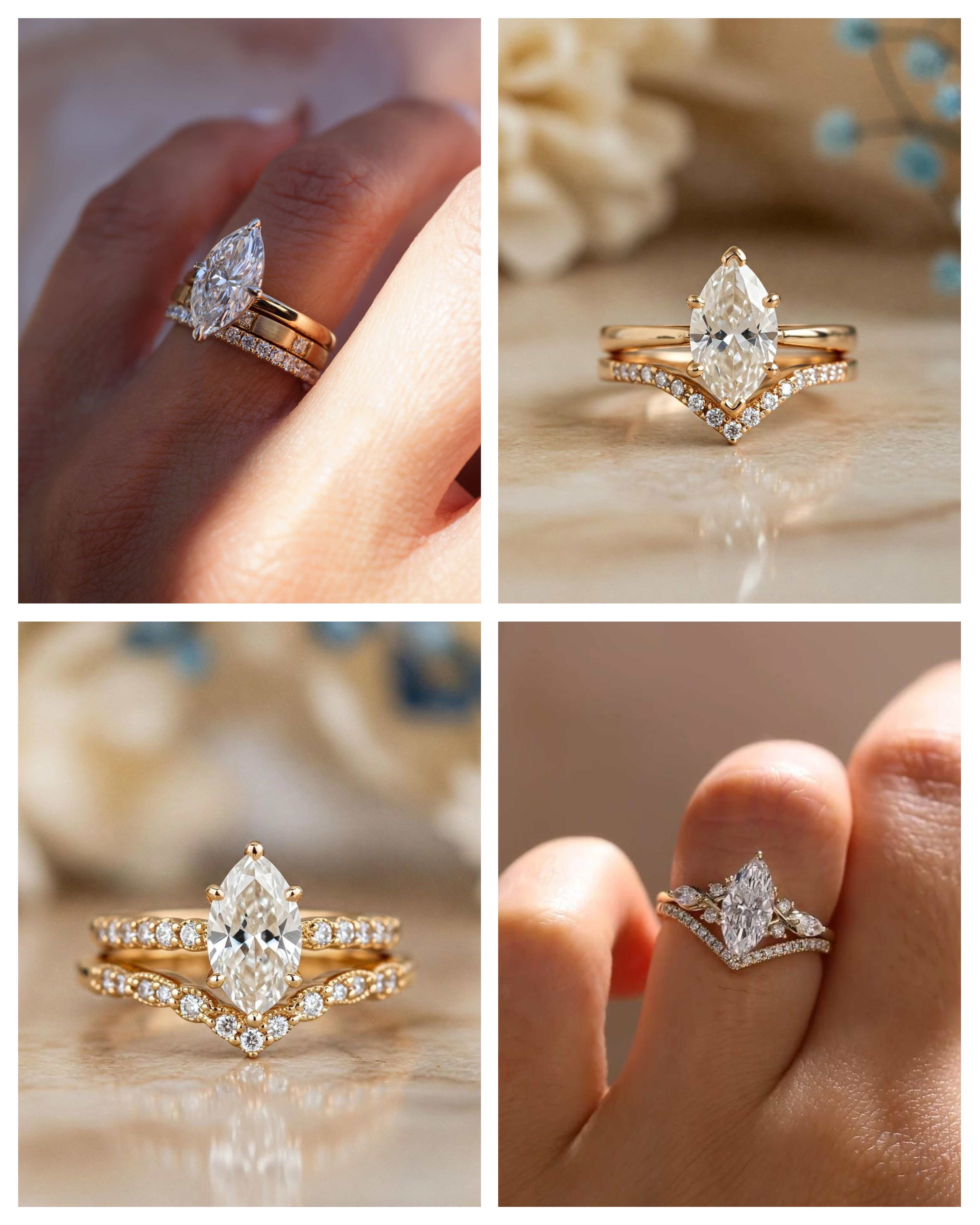
Marquise Cut Engagement Rings
Similar to the pear shape, the Marquise features pointed ends that often extend over the finger. Standard straight bands usually leave large gaps or hit the stone awkwardly. Chevron or V-shaped bands are essential here to mirror the sharp points. Ring jackets are also a fantastic option for Marquise stones; they surround the diamond on both sides, cradling it perfectly and enhancing its symmetry. Open bands can also work well, leaving negative space for the stone's tips to rest comfortably.
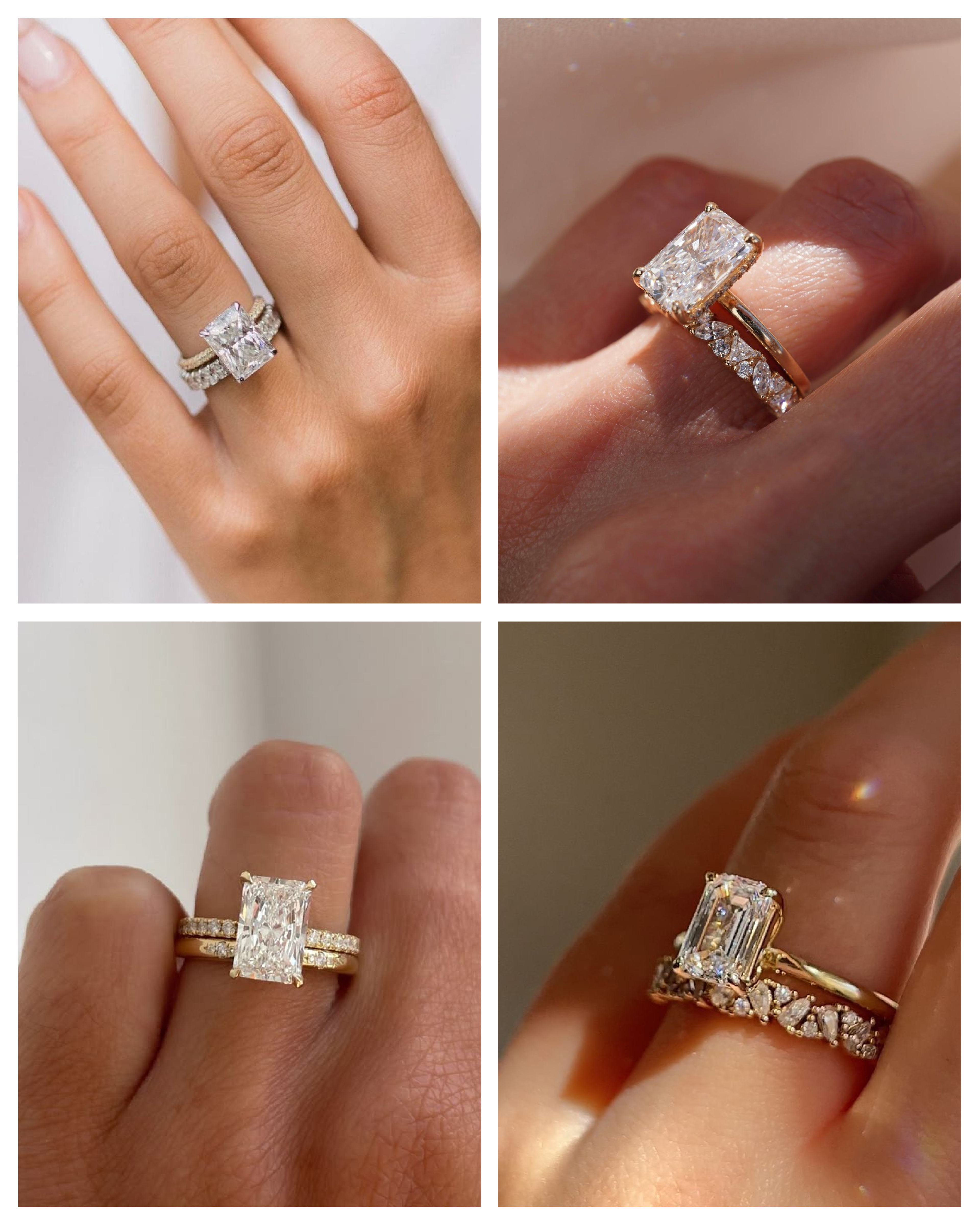
Radiant Engagement Rings
Radiant cuts combine the silhouette of an emerald cut with the brilliance of a round cut. This hybrid nature allows for flexible styling. Channel-set bands work well to echo the rectangular geometry, while thin pavé bands enhance the stone's intense sparkle without competing for attention. If you want to highlight the cut's intricate faceting, vintage-inspired bands with milgrain details provide a beautiful frame that balances structure with brilliance.
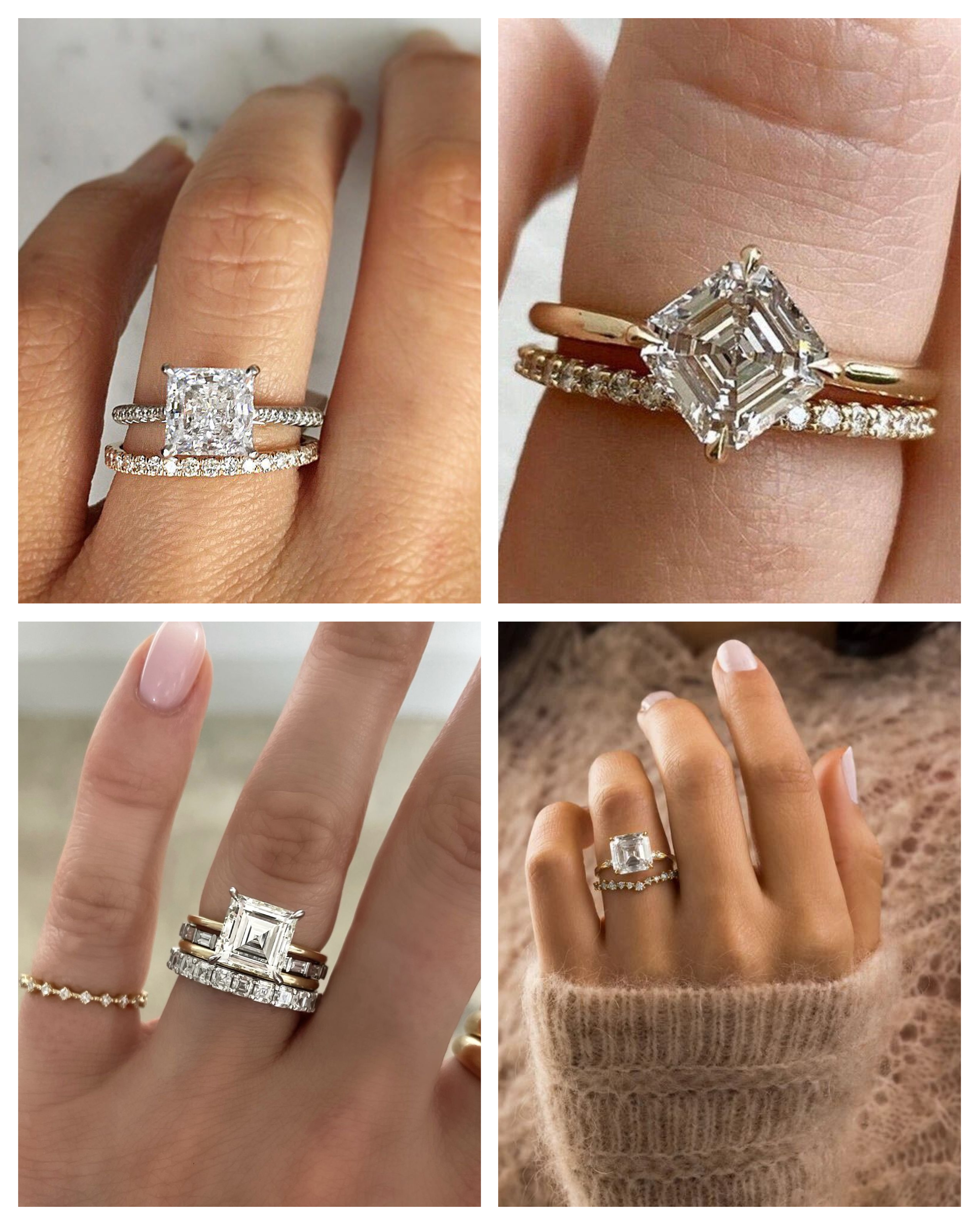
Asscher Cut Engagement Rings
The Asscher cut is deep and dramatic, featuring a "hall of mirrors" effect. It is a distinctively Art Deco style that demands a partner with equal presence. Bezel-set eternity bands provide a contemporary contrast that highlights the stone's shape. Channel-set diamonds or baguette bands are also superb choices, as they complement the step-cut faceting pattern with linear brilliance. The theme for Asscher pairings should always be precision and structure.
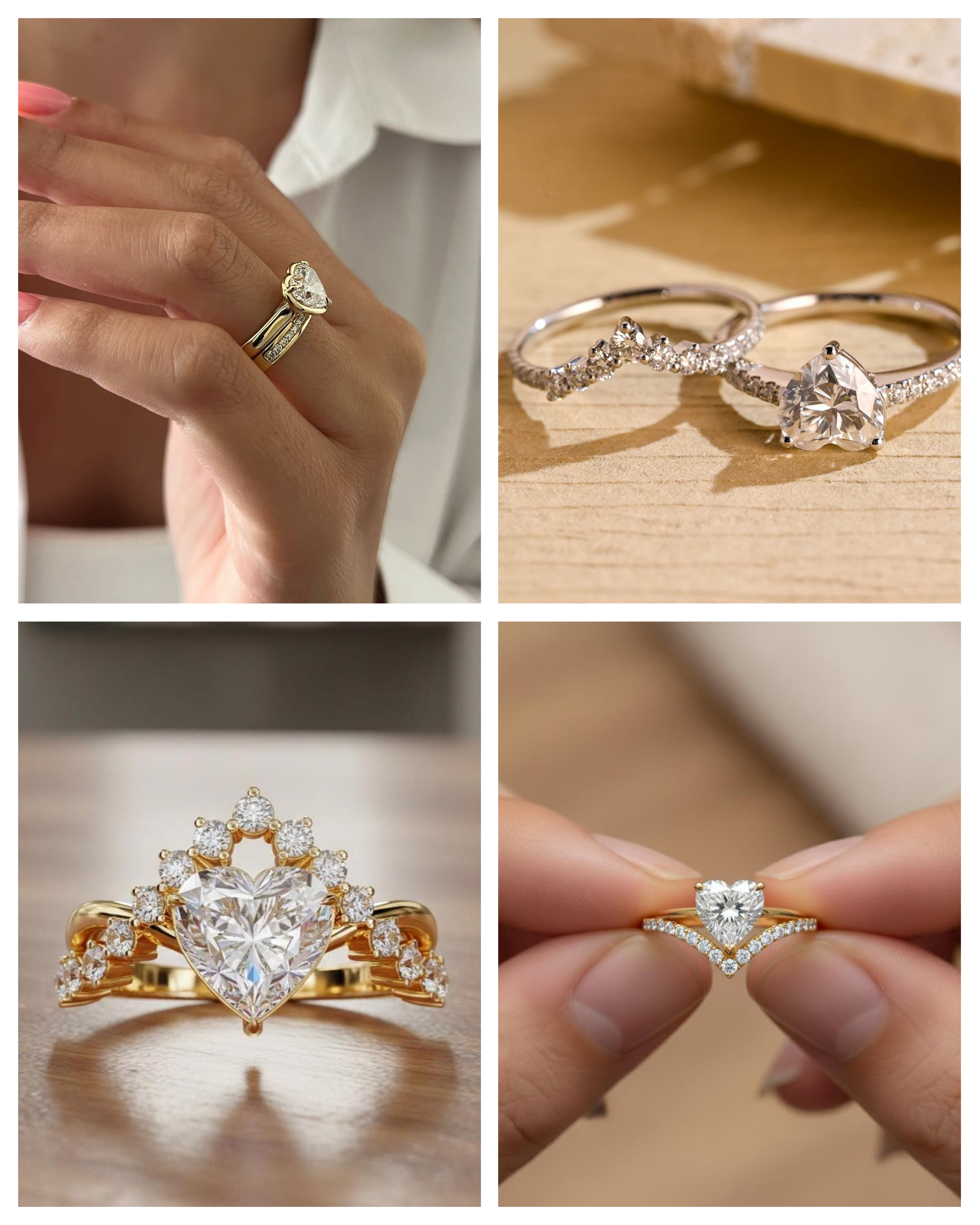
Heart Engagement Rings
Heart-shaped rings are rare, romantic, and possess a very distinct silhouette. It is vital to choose a band that doesn't distract from the heart shape. Curved or notched bands are usually required to fit snugly against the cleft or the point of the heart. Simple, thin bands are often the best choice to keep the spotlight on the center stone. If you want sparkle, opt for delicate pavé bands that add brilliance without obscuring the unique outline of the diamond.
Next article

14K vs. 18K Gold: A Comprehensive Guide to Purity, Color, and Value
Let's explore the key differences between two popular gold options, 14K gold and 18K gold, and determine which best suits your needs.