
How Much Should an Engagement Ring Cost in 2026?
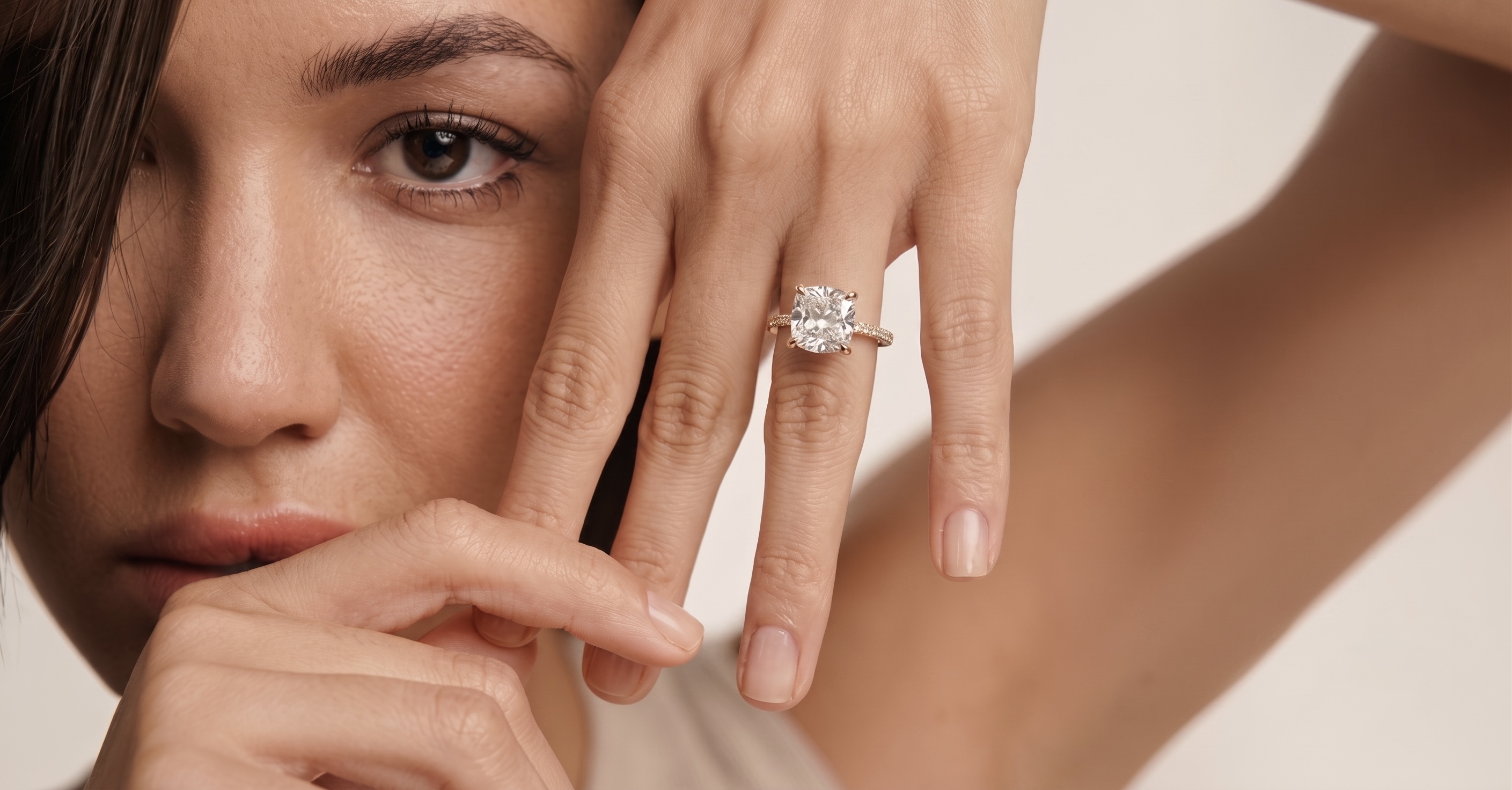
Here's the honest answer: whatever you can genuinely afford without going into debt for it. Not the most romantic sentence in this article, but it happens to be the only rule that actually holds up. Today, engagement ring price ranges from a few hundred euros to well over ten thousand — and a beautiful, well-made ring can sit at either end of that range.
At Omara, we talk to couples every day who are asking exactly this question: what's a realistic budget, what counts as too little, and what counts as overspending? In this guide, we'll debunk the most famous myth about engagement ring budgets, walk through what actually drives the price, and give you concrete guidance for every budget level — including the role lab-grown diamonds now play in stretching what your money buys.
Where did the "two to three months' salary" rule actually come from?
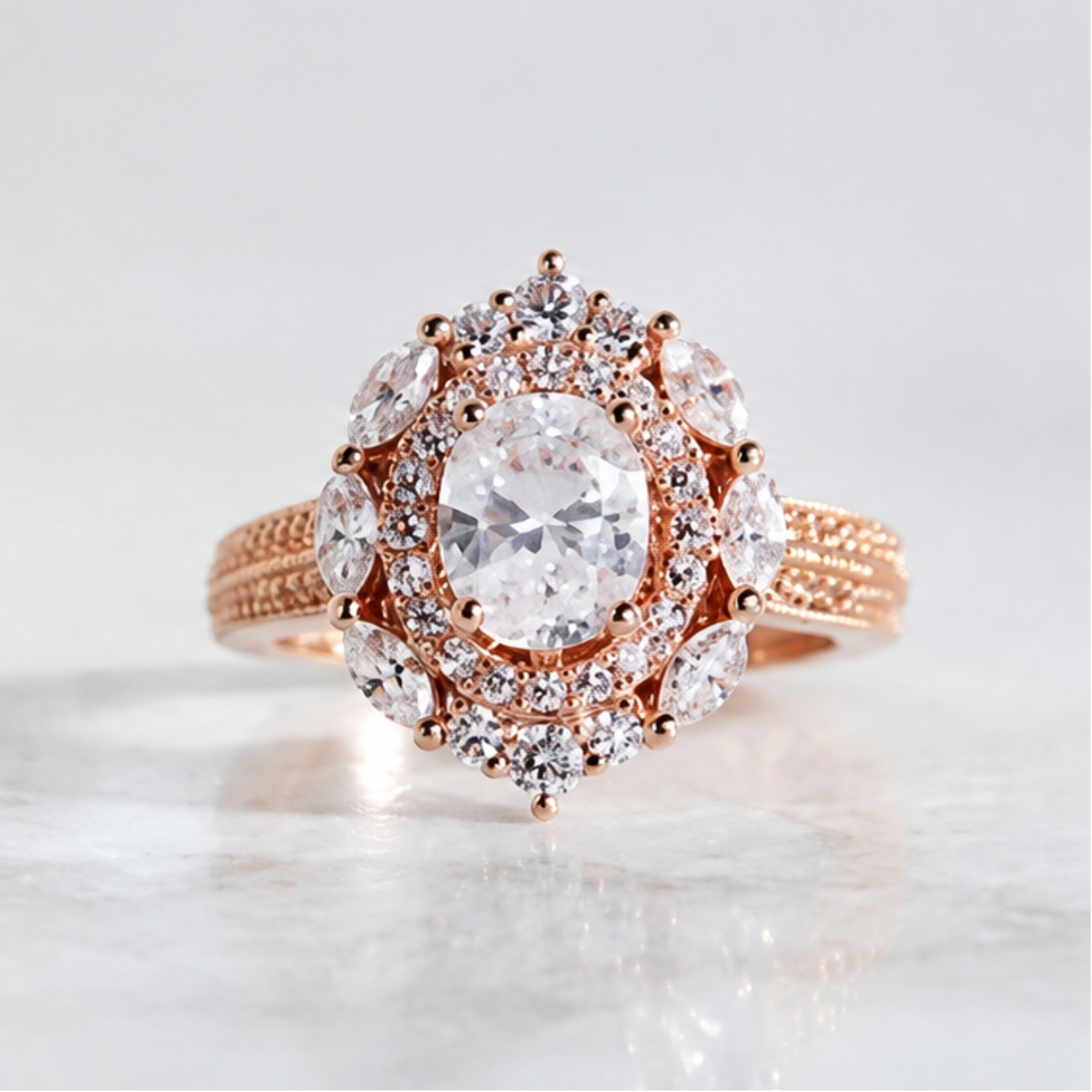
This rule feels like it's been around forever, but it's actually one of the most successful advertising campaigns in history. In the 1930s, the diamond company De Beers hired the advertising agency N. W. Ayer to grow the American diamond market — at a time when diamond engagement rings were far from universal.
The agency deliberately planted the idea that a man should spend "one to two months' salary" (later stretched to three in some markets) on his fiancée's ring. It was reinforced by the now-famous 1947 slogan "A Diamond is Forever." This was never financial advice. It was a manufactured social norm, designed to sell more diamonds — and it worked remarkably well for decades.
This origin is well documented and no longer any secret. Yet the idea still lingers in a lot of people's heads. Our take: don't let a 90-year-old marketing strategy dictate your spending. Your budget should reflect your actual financial situation — not a number an ad copywriter invented.
What actually drives the price?
Instead of a made-up percentage rule, it's far more useful to understand what genuinely moves the needle on cost. Five factors together determine what an engagement ring costs:
- Diamond type: By far the biggest single lever. A lab-grown diamond costs roughly 60–80% less than a natural diamond of the same quality. Visually, chemically, and in brilliance, they're essentially identical — only their origin differs.
- Carat weight: The relationship between size and price isn't linear. A stone just under a round number — say, 0.90ct instead of 1.00ct — looks nearly identical but costs noticeably less.
- Cut: The single biggest factor in how much a diamond actually sparkles. This is rarely the place to cut corners — an excellent cut makes even a smaller or slightly lower-grade stone look stunning.
- Color & clarity: Stones graded G–H color and VS2/SI1 clarity look completely eye-clean to the naked eye, but cost meaningfully less than top-grade stones.
- Metal: Platinum is the priciest option; gold — 14K or 18K — is considerably cheaper without sacrificing durability.
Understanding these five levers lets you spend where it actually shows and save where it genuinely won't be noticed.
What can you expect at each budget level?
The table below offers general guidance on what's realistically achievable at different price points. Actual prices will always depend on design, stone size, and the specific setting you choose.
| Budget | What to expect |
|---|---|
| Up to €500 | A simple, elegant solitaire in 10K gold with a smaller center stone — a lovely, clean starting point. |
| €500 – €1,200 | A well-crafted design in 14K gold with accent stones, typically featuring a lab-grown diamond around 0.5–0.7ct. |
| €1,200 – €2,500 | Our most popular range: a roughly 1ct lab-grown diamond in a beautifully considered setting. |
| €2,500 – €5,000 | A larger lab-grown diamond (1.5–2ct+), or alternatively a smaller natural diamond. |
| €5,000+ | Custom designs, larger natural diamonds, platinum settings, and fully bespoke work. |
How lab-grown diamonds change the budget math
Ten years ago, the choice was simple: natural, or nothing. That's no longer the case. Lab-grown diamonds are chemically, physically, and optically the exact same carbon crystal as natural diamonds — the only difference is where they were formed. Even a trained eye or standard grading equipment can't tell the difference in fire or brilliance.
The real advantage is price: at the same carat weight, cut, and color/clarity grade, a lab-grown diamond costs roughly 60–80% less than its natural counterpart. In practical terms, that means someone whose budget once bought a 0.5ct stone can often choose a significantly larger, better-cut stone with a lab-grown diamond — without stretching the budget at all.
At Omara, we work exclusively with certified, top-quality lab-grown diamonds, because they let our customers get the most out of their engagement ring price without compromising on cut, clarity, or size.
Practical tips for spending your budget wisely
- Set a firm budget before you start looking at rings. This keeps expectations from creeping upward with every prettier stone you see.
- Prioritize cut over size. A smaller, perfectly cut diamond often sparkles more impressively than a larger one with a mediocre cut.
- Consider carat weights just under a round number. 0.90ct instead of 1.00ct saves noticeably, with no visible difference to the eye.
- Seriously consider a lab-grown diamond. It's the single most effective way to get a bigger stone, a better cut, or a nicer setting for the same money.
- Choose your metal deliberately. 14K gold is durable, elegant, and considerably cheaper than platinum, with minimal everyday visual difference.
- Talk openly about the budget together. An honest conversation about financial limits is a healthy way to start a shared future — and it takes the pressure off the decision.
One last, important piece of advice: don't go into debt for a ring
An engagement ring marks a genuinely special moment, but it should never be the reason to take out a loan or max out a credit card. A ring that starts your engagement under financial strain isn't a good foundation for what comes next. The good news is that between lab-grown diamonds and smart choices around carat, cut, and metal, there's a genuinely beautiful, well-made ring available at nearly every realistic budget — no debt required.
Frequently Asked Questions
Next article
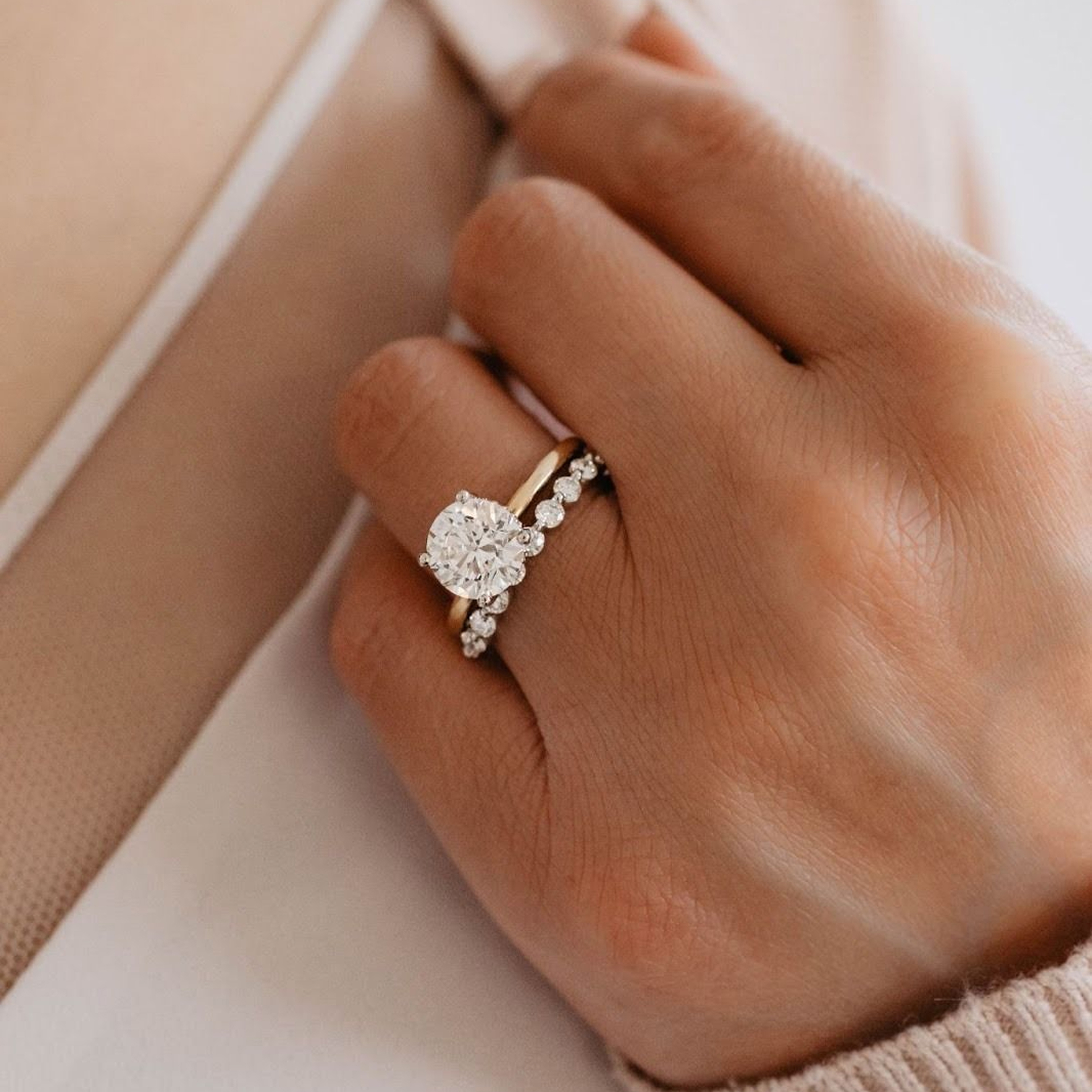
What Hand Does a Wedding Ring and Engagement Ring Go On?
Both the wedding ring and the engagement ring are typically worn on the left hand's fourth finger (commonly called the "ring finger"), but this tradition varies depending on culture and region. To help understand these variations, this guide explores the etiquette of wearing your wedding and engagement rings.