
Engagement Ring: Which Hand and Finger, and How to Choose

An engagement ring is the piece of jewellery many people look at most often in their lives – and at the same time one where the small questions beforehand cause big worries: where do you wear an engagement ring, on which hand and which finger? And how do you find, among hundreds of models, the ring you will still like as much in twenty years as you do today? Both can be settled calmly and without pressure.
This article first answers the question of hand and finger, then explains what changes after the wedding, and afterwards guides you step by step through the choice of style, metal and stone. At the end you will find a decision aid for a ready-made ring versus a custom ring, as well as answers to frequently asked questions.
Where do you wear an engagement ring: which hand and which finger?
In Austria the engagement ring is traditionally worn on the left hand, on the fourth finger, the ring finger. According to an old belief, a vein runs from this finger straight to the heart. That is more legend than anatomy, but the custom has stuck. To the question “engagement ring: which hand”, the answer in the German-speaking world is therefore usually: left. It is not compulsory, and nobody will correct you if you choose the other hand.
It gets more interesting after the wedding. Here, the usual practice is to wear the wedding ring on the right hand. The engagement ring then either also moves to the right hand and sits in front of the wedding ring, or stays on the left and is worn alone or together with a second ring. A detailed overview of all the common variants can be found in the article Which hand do the engagement ring and wedding ring go on.
| Situation | Hand and finger | Note |
|---|---|---|
| After the proposal, before the wedding | Left hand, ring finger | The traditional variant in Austria |
| Wedding, wedding ring | Right hand, ring finger | Usual in the German-speaking world, often on the left in other countries |
| After the wedding, variant 1 | Both rings on the right hand | The engagement ring usually sits in front of the wedding ring |
| After the wedding, variant 2 | Engagement ring left, wedding ring right | Each hand wears one ring, practical with wide rings |
| After the wedding, variant 3 | Both rings on the left hand | Popular when the rings should go well together |
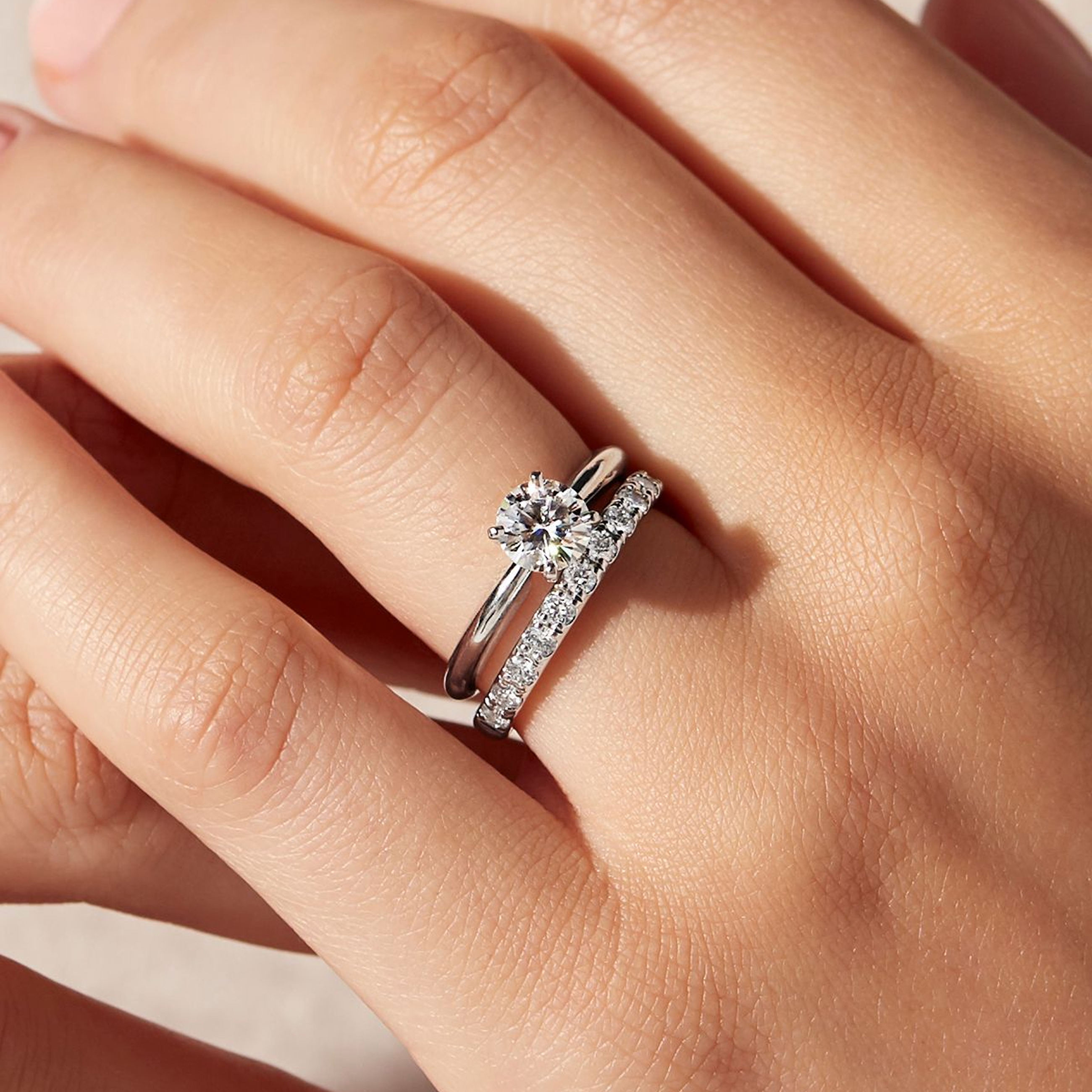
Engagement ring: which finger, and the right size?
Hand and finger are quickly decided; the size needs more attention. The fingers of your two hands are not equally thick, and finger size varies with temperature and time of day. It is therefore best to measure in the evening at room temperature, on the ring finger of the hand on which the ring will be worn.
If you are not sure, choose slightly looser rather than too tight: a ring can generally be made a little smaller more easily than larger. Resizing after purchase is offered at Omara; you will find details on the page sizes and adjustments.
Choosing the engagement ring: style, metal and stone
After hand and size comes the actual selection. A good order is: style first, then metal, and the stone last. That way you do not get lost in details before the basic direction is settled. If you are unsure what your partner likes, take your cue from the jewellery they already wear every day.
The classic engagement ring and its alternatives
A classic engagement ring is usually a solitaire: a single diamond in a simple setting that puts the stone centre stage. That suits almost any style and does not look old-fashioned even after years. If you like something more eye-catching, choose a ring with side stones, a halo or three stones; if you like something romantic, a vintage style. The table shows the differences at a glance.
| Style | Effect | Suits | Things to consider |
|---|---|---|---|
| Solitaire (classic) | Simple, timeless | Anyone looking for a ring “for ever” | The stone stands alone, so quality shows |
| Side stones | More sparkle, slightly playful | Those who like more glitter | More settings, more elaborate cleaning |
| Halo | Stone looks larger | Those who want impact at the same stone weight | Bolder look, not everyone likes it |
| Three stones | Symbolic (past, present, future) | Those who want to combine meaning and looks | Larger ring, broader presence |
| Vintage | Playful, rich in detail | Those looking for individuality | Details need more care |
Engagement ring in yellow gold, white gold or rose gold?
With the metal it is mainly about the colour that suits you and the hand. An engagement ring in yellow gold looks warm and classic, especially combined with a warm skin tone. The range of engagement rings in gold shows how different such rings can look. White gold looks cool and makes colourless diamonds appear especially clear, as the engagement rings in white gold show. Rose gold is considered particularly romantic.
The stone: certificate and origin
At Omara you will find only diamonds with an independent GIA or IGI certificate, both lab-grown and natural. They do not differ in appearance, but they do in price: lab-grown diamonds are approximately 60 to 80% cheaper than natural diamonds of comparable quality. That means either a larger stone or more room in the budget. To be fair: on resale, lab-grown diamonds typically return about 20 to 40% of the purchase price, natural diamonds about 40 to 60%. An engagement ring is not a financial investment in either case; it is a piece of jewellery with emotional value.
How much an engagement ring should cost is a question in itself. You will find a sober assessment in the article How much should an engagement ring cost in 2026.
Ready-made engagement ring or custom: how to decide
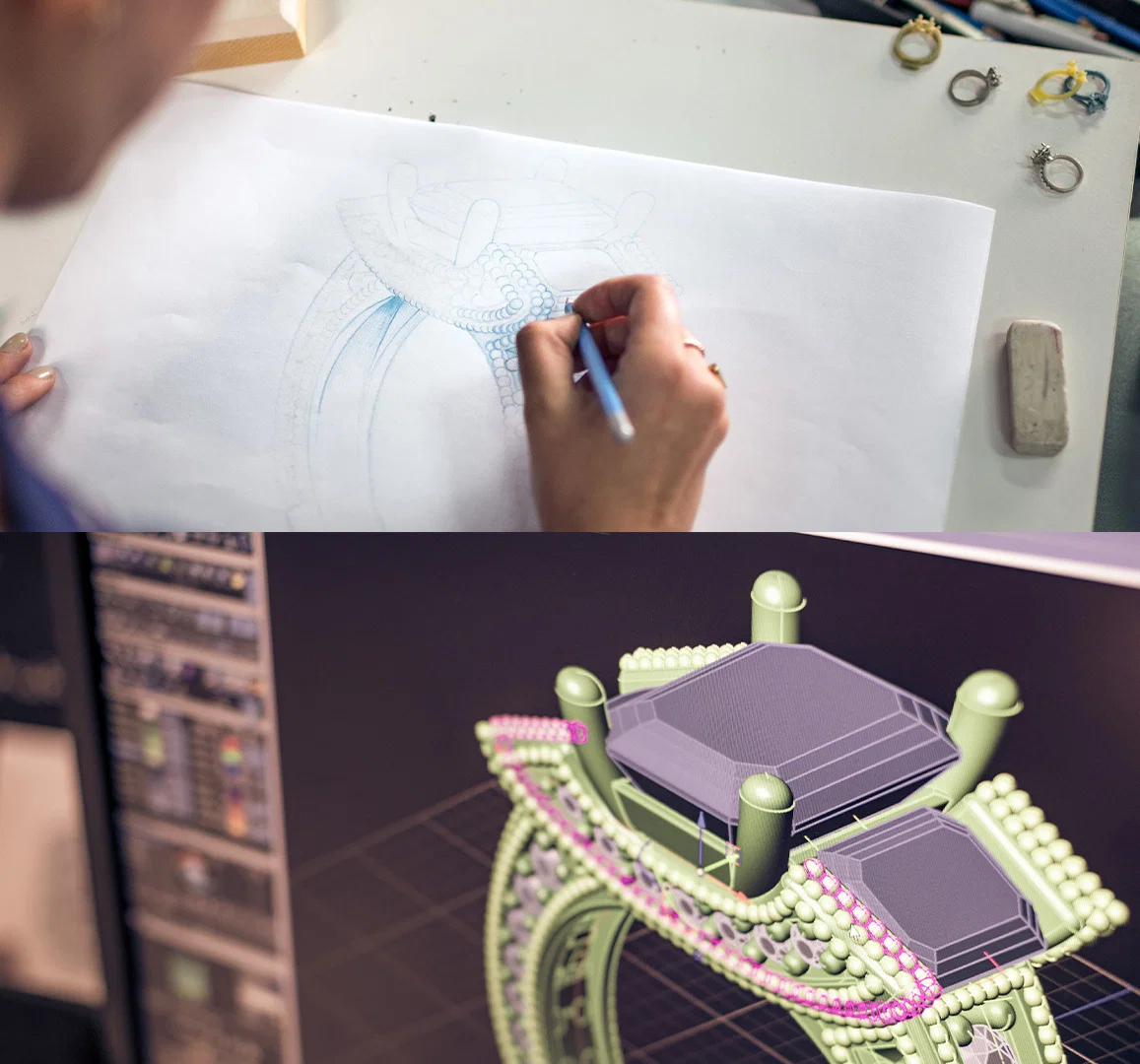
Two routes to the right ring
Engagement rings come ready-made with fast shipping or custom-made. Both have their place, and the difference lies mainly in time and effort: a custom ring usually costs more and takes longer, but you end up with a ring exactly as you imagined it.
Choose a ready-made ring if:
- The proposal is coming up soon and time is short
- You are looking for a classic model that you already like
- You want to keep a clear eye on the budget
- You prefer to take your cue from finished examples when it comes to details
Choose a custom ring if:
- You have a special setting, shape or engraving in mind
- You can allow enough time before the proposal
- A unique ring matters more to you than a quick one
- You are prepared to pay more for individuality
If you are looking for a ring to your own ideas, take a look at the page custom design. If you are only just starting, you can begin with the general guide How to choose the perfect engagement ring.
Good to know: The question of hand and finger is a tradition, not a rule. If you would rather wear the ring on the other hand for practical reasons, for instance because you work a lot with your hands, that is a perfectly legitimate decision. The only important thing is that the size suits the chosen hand, because the fingers of your two hands usually differ a little.
In short: first the hand, then the style, then the stone
In Austria the engagement ring is traditionally worn on the left ring finger, the wedding ring often on the right, and after the wedding several combinations are possible. When choosing, the rule is: settle style and metal first, then check stone and certificate, and finally decide whether a ready-made or a custom ring suits better. If you are unsure, a personal consultation is a good next step, even without any pressure to buy.
Engagement rings collection – take a look at Omara’s engagement rings and find the ring that suits your story.
Frequently asked questions
Next article
Custom vs. Ready-Made Ring: Which Is Right for You?
Custom-made or ready-made ring — which path is right for you? We compare price, timeline, and certainty for both options, so you can decide with confidence.