
VVS Stones: Diamond Buying Checklist (Clarity, Certificate)
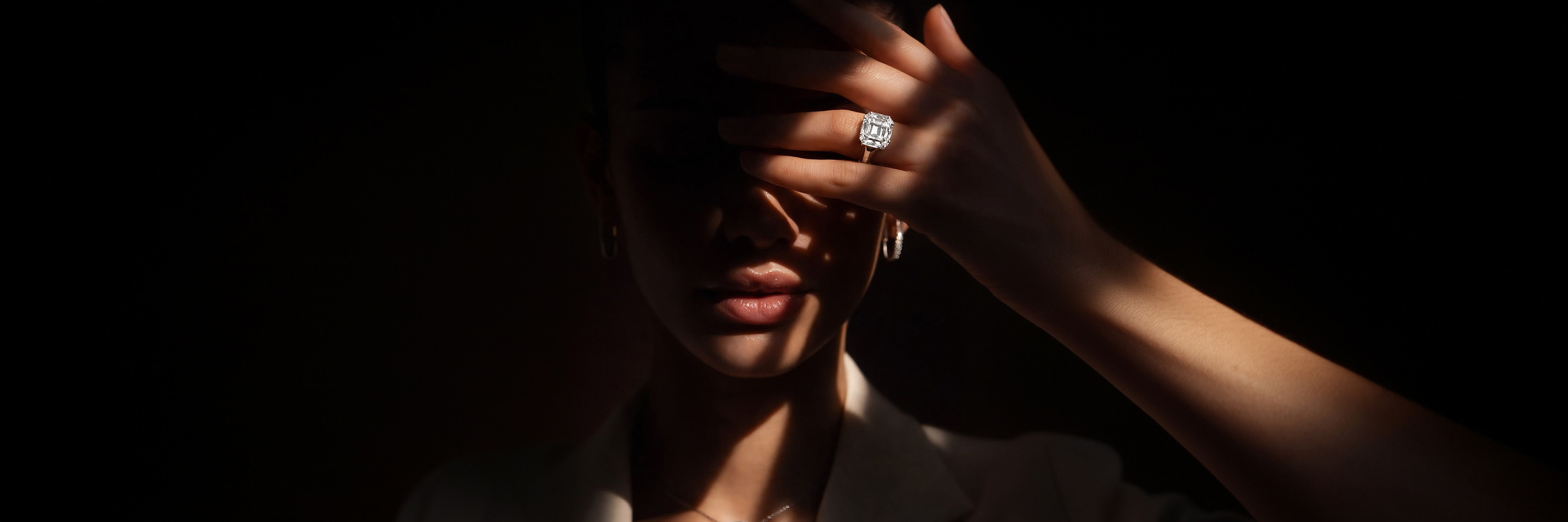
VVS stones are considered especially pure, and the abbreviation shows up in almost every diamond offer around Black Friday (27 November). But what does VVS actually mean, how much clarity do you really need, and how can you tell whether an offer is trustworthy? These are questions to settle before you buy a diamond or a diamond ring, not afterwards.
In this article we explain the clarity scale in plain language, give you a seven-point checklist for buying a diamond and show whether and how you can recognise lab-grown diamonds. At the end you will find a few honest tips for keeping a cool head on sale days.
VVS stones explained: what clarity means in a diamond
Clarity describes how many natural inclusions or surface marks a diamond has and how noticeable they are. Gemmologists grade it under ten times magnification, not with the naked eye. VVS stands for “very very slightly included”: even trained experts find these marks under the loupe only with difficulty. The same scale applies to natural and lab-grown stones.
Diamond clarity chart: from FL to I3
| Clarity grade | Meaning | Visible to the naked eye? | Who it suits |
|---|---|---|---|
| FL / IF | Flawless to internally flawless, practically no marks | No | Anyone who wants the rarest and pays more for it |
| VVS1 / VVS2 | Very, very slight inclusions | No | Anyone combining very high clarity with a large stone |
| VS1 / VS2 | Very slight inclusions | Usually not | An excellent choice for most engagement rings |
| SI1 / SI2 | Slight inclusions | Sometimes, depending on position and stone size | Anyone who would rather put the budget into size or cut, after checking the individual stone carefully |
| I1 to I3 | Obvious inclusions | Often | Better for designs where the stone is not the centrepiece |
The scale is a guide. Two stones with the same grade can differ considerably in the position and type of their inclusions, which is why the individual stone and its certificate always count. For how clarity fits into the “4 Cs”, read our article VVS diamonds and clarity in detail.
Do you really need a VVS diamond?
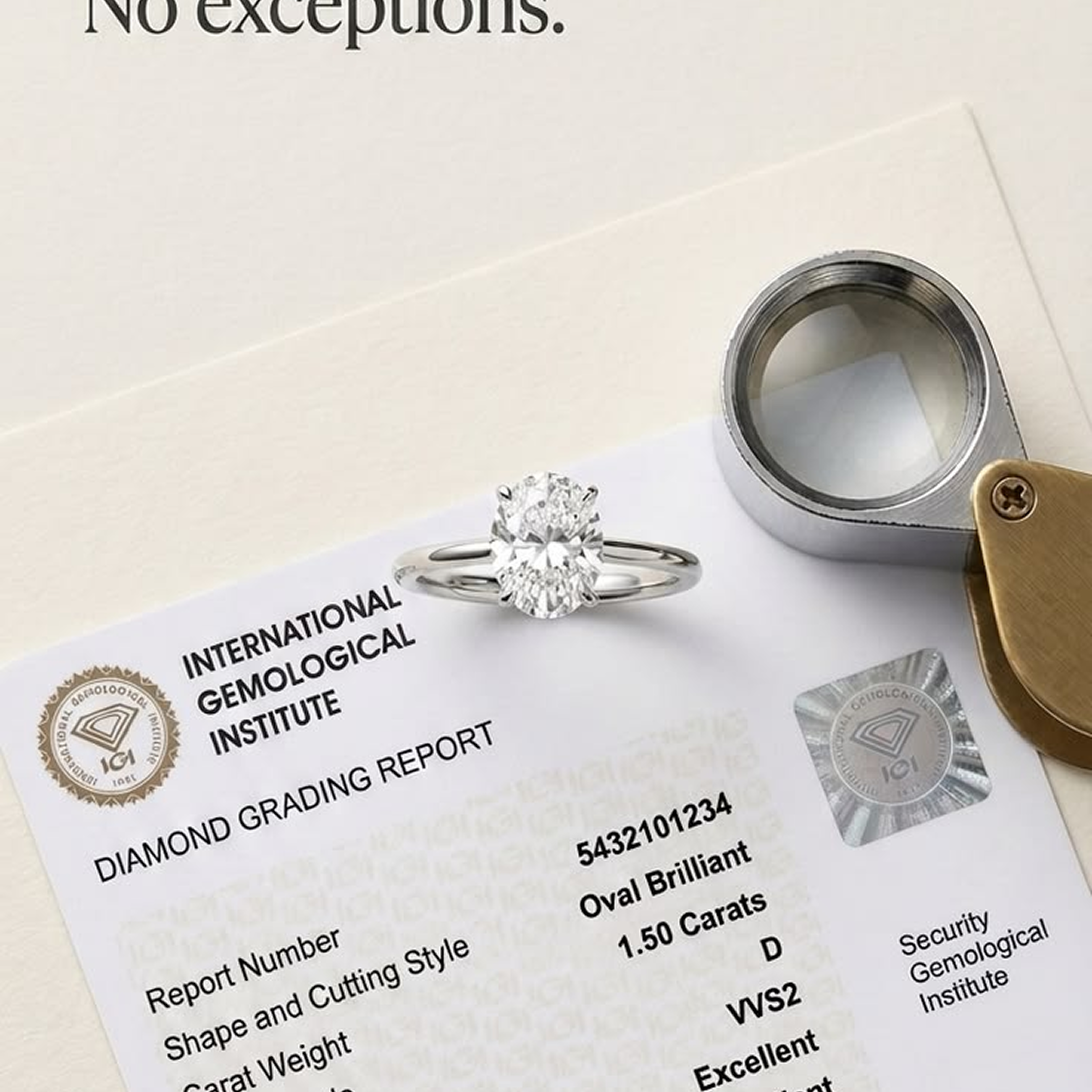
Clarity you cannot see still costs money
Between VVS and VS you usually cannot see a difference with the naked eye. With VVS you are paying mainly for rarity and for the certainty that even under the microscope there is hardly anything to find. That is a perfectly legitimate wish, but you should make it a conscious choice.
For small and medium stones a clarity in the VS to SI1 range is often enough, provided the stone is “eye-clean”, meaning it looks clean without a loupe. The larger the stone and the more open the step-cut facets (for example emerald or baguette cuts), the sooner inclusions show.
Our honest tip: A superbly cut diamond with VS clarity usually sparkles more beautifully than a mediocre cut VVS stone. The cut decides the fire; clarity only decides whether something disturbs. If you want to save money or choose a larger stone, making the cut your priority often works out better.
Checklist: 7 points before you buy a diamond
This list helps on sale days just as much as on an ordinary Tuesday in January. Tick off each point before you pay:
- Check the certificate: Omara sells only diamonds with an independent GIA or IGI certificate. For every offer, ask for the certificate number and compare details such as carat, colour, clarity and cut. What a certificate tells you is explained on our certification page.
- Clarify the origin: Whether natural or lab-grown must be stated clearly. Both are real diamond; only the price and the resale value differ (more on that below).
- Look at the 4 Cs together: Carat, colour, clarity and cut belong together. If you compare only one value, you are comparing apples with oranges. Our diamond guide gives an overview.
- Prioritise the cut: It determines how lively the stone sparkles. For round brilliants the certificate gives a separate cut grade.
- Eye-clean rather than letter-chasing: Ask how the actual stone looks, not only how it is graded. Especially in the VS and SI range, individual stones can differ a lot.
- Think about setting, metal and size too: A diamond alone is not yet a ring. Rings are available ready-made with fast shipping or made to order, and resizing after purchase is possible. If you are planning something individual, find ideas under custom design.
- Look at delivery and service: Especially before Christmas the schedule matters. You will find the current delivery times on the delivery page, please before you order, not after.
Recognising lab-grown diamonds: is it possible with the naked eye?
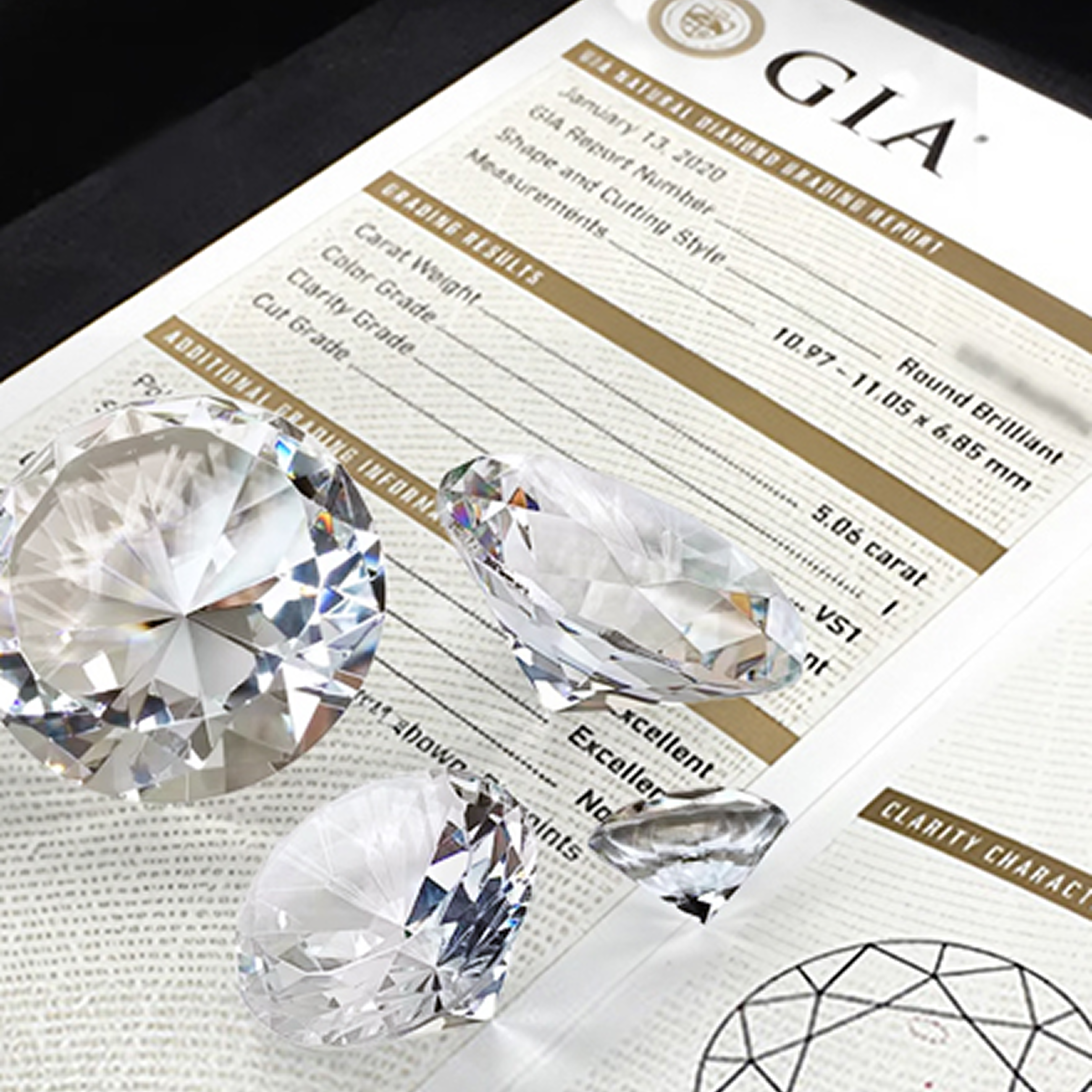
No, but the certificate says it clearly
A lab-grown diamond consists of the same carbon, has the same crystal structure and the same hardness as a natural one. Neither a jeweller nor a layperson can see the difference without special equipment. Only the laboratory report, which names the origin explicitly, gives certainty; often the certificate number is also laser-inscribed on the edge of the stone, so you can match stone and paper.
Be suspicious if someone claims they can “tell by the sparkle”, or if the origin is not mentioned in the offer at all.
The price is the most important practical difference. At comparable quality, lab-grown diamonds are approximately 60 to 80% cheaper than natural ones. In return, if you sell, you typically get back about 20 to 40% of the purchase price, compared with about 40 to 60% for natural diamonds. If you want to compare the two worlds in detail, the article Lab-grown vs mined diamonds: the honest comparison helps.
| Lab-grown | Natural | |
|---|---|---|
| Appearance and hardness | Identical to natural diamond | Identical to lab-grown diamond |
| Price at comparable quality | Approximately 60 to 80% cheaper | Higher |
| Resale (typical) | About 20 to 40% of the purchase price | About 40 to 60% of the purchase price |
| Origin on the certificate | Stated explicitly (GIA or IGI) | Stated explicitly (GIA or IGI) |
| Makes sense if … | You want more stone for your budget | The natural origin matters to you |
Black Friday and buying a diamond: staying calm
Sale days rely on speed. For a purchase that will accompany you for decades, speed is rarely good advice. Two things help: set your budget and priorities (cut, size, metal) before 27 November, and compare only offers with the same key data. A “VVS ring” without a traceable certificate is no yardstick, however low the price looks.
- Like for like: The same carat weight, colour, clarity, cut and grading lab, otherwise prices are not comparable.
- Ask for the origin: Especially with strikingly low prices, check whether it is a lab-grown diamond.
- No time pressure: A serious offer survives a night of reflection. Browse the diamond rings in your own time and clear up open questions beforehand.
Good to know: Where you buy an engagement ring matters less than whether you can check the certificate, the origin and the delivery time before you order. That applies online as much as in a shop.
Summary: clarity matters, but it is not everything
VVS stones are rare and pure, but in everyday life they are usually not visibly better than good VS stones. If you keep the certificate, the origin and the cut in view and divide your budget sensibly, you make a decision you will still be happy to explain years later. And if you are unsure before buying: asking costs nothing.
View engagement rings with certificates – discover rings with diamonds certified by GIA or IGI, natural or lab-grown, ready-made or made to your wishes.
Frequently asked questions
Next article
10k Gold: What It Means and How 14k and 18k Differ
What does 10k gold mean? Carat grades, hallmarks 417, 585 and 750, a comparison table and a simple decision aid for choosing gold.